When you handle sensitive, hazardous, moisture-sensitive, or contamination-prone materials, choosing the right containment equipment is essential for maintaining process control and protecting laboratory personnel. An isolation glove box provides a controlled enclosure that allows you to manipulate materials through integrated gloves while limiting direct contact with the surrounding environment. To specify the right system, you need to evaluate your material risks, containment requirements, operating conditions, construction materials, and access needs before selecting a design.
Define Your Material Handling Requirements
Start by identifying the materials you intend to handle and the risks associated with each process. Powders, reactive chemicals, biological samples, and moisture-sensitive compounds may require different containment strategies.
Document the following details before comparing equipment:
- Material type, quantity, and physical properties.
- Potential toxicity, reactivity, or contamination risks.
- Sensitivity to oxygen, humidity, or airborne particles.
- Frequency and duration of handling operations.
- Required cleanliness and containment performance.
These details help you establish whether your application needs a sealed isolation enclosure, a controlled-atmosphere system, or specialized filtration and exhaust arrangements.
For example, handling hygroscopic powders may require humidity control, while oxygen-sensitive compounds may need an inert atmosphere. If your work involves hazardous substances, determine the required containment level through a documented risk assessment rather than assuming that a sealed enclosure alone provides adequate protection.
Determine the Required Isolation and Containment Level
Your isolation glove box specification should define what must remain inside the enclosure and what must be prevented from entering it. This distinction is important because protecting the operator, preserving the sample, and preventing cross-contamination are different objectives.
Consider whether your application requires:
Operator protection: Limiting exposure to hazardous materials.
Product protection: Preventing dust, moisture, or environmental contaminants from reaching sensitive samples.
Cross-contamination control: Separating materials or processes that should not mix.
Atmosphere control: Maintaining specified oxygen, moisture, or gas conditions.
Environmental containment: Preventing hazardous particles or vapors from escaping.
Specify measurable performance criteria wherever possible, such as allowable oxygen or moisture concentrations, pressure operating ranges, and validated containment performance.
Do not assume every isolation glove box can satisfy every requirement. Some applications require dedicated filtration, pressure monitoring, gas purification, or independent exhaust systems.
Select the Appropriate Glove Box Configuration
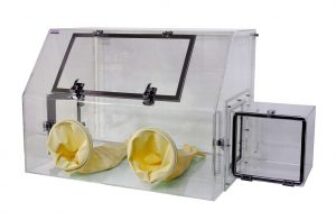
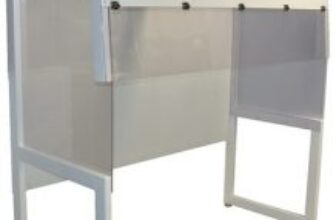
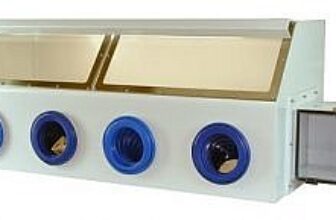
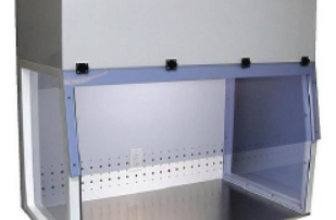
The enclosure design should reflect your workflow, available space, and material transfer requirements. Review the available isolation glove box systems for controlled laboratory material handling to identify configurations that align with your application.
Evaluate these design features:
Enclosure dimensions: Allow sufficient room for equipment, tools, containers, and operator movement.
Glove ports: Position ports for comfortable reach and effective manipulation.
Viewing panels: Provide clear visibility across the working area.
Transfer systems: Use appropriately designed pass-through chambers or antechambers to move materials while maintaining isolation.
Service connections: Plan for required gases, electrical supplies, vacuum lines, and monitoring equipment.
Choose a configuration that supports your complete workflow, not simply the largest enclosure that fits your budget. Poorly positioned glove ports, restricted visibility, or inadequate transfer space can increase handling errors and complicate routine operations.
Choose Compatible Construction and Glove Materials
Your enclosure and gloves must withstand the chemicals, cleaning agents, and operating conditions involved in your process. Material compatibility affects equipment durability, containment reliability, and maintenance frequency.
Evaluate the following components:
Enclosure: Select stainless steel, polymer, or another suitable material based on chemical resistance, cleanliness, and structural requirements.
Gloves: Confirm resistance to the specific chemicals, solvents, temperatures, and mechanical stresses involved.
Seals and gaskets: Verify compatibility with process chemicals and the required pressure conditions.
Viewing windows: Check chemical resistance, visibility, impact resistance, and cleaning requirements.
Ask suppliers for compatibility documentation rather than relying on general material descriptions. You should also confirm glove replacement procedures and the availability of compatible spare parts. These measures help reduce unplanned downtime and support consistent isolation performance.
Specify Pressure Control, Filtration, and Monitoring
Pressure control and filtration are critical when your work involves hazardous materials or a sensitive internal atmosphere. Your specification should state the required pressure mode, operating range, alarm limits, and response to system failures.
Positive pressure can help exclude external air from certain controlled-atmosphere enclosures, while negative pressure can help prevent hazardous contaminants from escaping. Neither setting is universally appropriate; select the configuration according to your risk assessment and containment requirements.
Consider including:
- Pressure sensors and clearly defined operating limits.
- Oxygen and moisture monitoring where required.
- Appropriate particulate or chemical filtration.
- Audible or visual alarms for abnormal conditions.
- Pressure relief and safeguards against over-pressurization.
- Documented testing and calibration procedures.
If your application requires an inert atmosphere, specify the target oxygen and moisture levels, gas type, purification capacity, and recovery time. Require the supplier to demonstrate that the proposed system can achieve and maintain these conditions under realistic operating loads.
Plan Material Transfer, Cleaning, and Maintenance
An isolation glove box must support the movement of materials without unnecessarily compromising containment. Specify how you will introduce raw materials, transfer samples, remove waste, and clean the internal surfaces.
A suitable pass-through or antechamber can help maintain isolation during material transfers. Smooth surfaces, accessible components, and replaceable seals can also simplify cleaning and routine inspection.
Before finalizing your purchase, establish:
- Cleaning and decontamination procedures.
- Glove, seal, and filter replacement intervals.
- Sensor calibration and leak-testing requirements.
- Preventive maintenance schedules.
- Spare-part availability and technical support.
- Operator training and emergency procedures.
You should also confirm installation requirements, including room ventilation, electrical connections, gas supplies, exhaust routing, and equipment access for servicing.
Evaluate Supplier Documentation and Performance
Your purchase specification should require evidence that the equipment meets your application requirements. Do not rely solely on a product brochure or a general statement that the enclosure is airtight.
Request technical drawings, operating manuals, material compatibility information, test reports, and documented performance specifications. Where applicable, define factory and site acceptance tests covering leak tightness, pressure control, alarms, filtration, and atmosphere performance.
Working with an experienced supplier such as CleaTech LLC can help you evaluate available laboratory containment equipment and identify a configuration suited to your workflow.
Before placing an order, compare the total cost of ownership, including installation, gas consumption, consumables, calibration, maintenance, and operator training. A lower initial purchase price may not provide the best long-term value if the system requires frequent servicing or cannot consistently meet your process requirements.
Conclusion
Specifying an isolation glove box for controlled material handling requires more than choosing enclosure dimensions. You need to define material hazards, isolation objectives, pressure conditions, compatible construction materials, monitoring requirements, and transfer procedures. Clear acceptance criteria and documented supplier performance help you select equipment that supports reliable operation and appropriate containment.
Review the available isolation glove box solutions for laboratory applications and match the specifications to your actual process risks. For assistance identifying a suitable configuration, Contact us today to discuss your material handling requirements.
Frequently Asked Questions
1. What is an isolation glove box used for?
An isolation glove box allows you to handle materials inside an enclosed workspace using integrated gloves. Depending on its design, it can help protect operators, prevent sample contamination, control exposure to environmental moisture or oxygen, and contain hazardous substances.
2. How do you choose the right isolation glove box?
Start by identifying the materials, hazards, required atmosphere, containment objectives, and handling procedures. Then evaluate enclosure dimensions, glove compatibility, transfer chambers, pressure controls, filtration, monitoring, and maintenance requirements.
3. Should an isolation glove box operate under positive or negative pressure?
The appropriate pressure depends on your application. Positive pressure may protect sensitive materials from external contamination, while negative pressure may help contain hazardous substances. Your risk assessment should determine the pressure mode and required safety controls.
4. Which materials are suitable for isolation glove box construction?
Stainless steel and compatible polymers are common options. The correct choice depends on chemical exposure, corrosion resistance, cleaning methods, structural requirements, and the atmosphere you need to maintain.
5. What should you check before purchasing an isolation glove box?
Review technical specifications, leak-tightness data, pressure controls, filtration, glove and seal compatibility, monitoring capabilities, transfer arrangements, maintenance requirements, and supplier documentation. Confirm that the proposed system can demonstrate the performance required for your application.