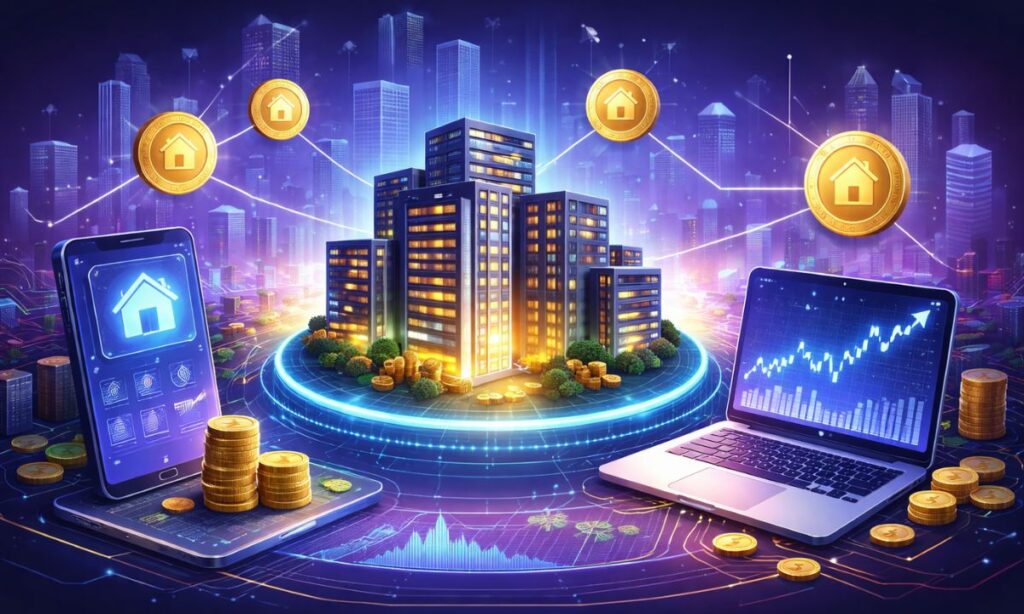
Real estate has traditionally been known as a slow-moving and relatively illiquid asset class. Buying or selling property often takes weeks or months, involves multiple intermediaries, and demands significant capital. This has kept real estate investments largely limited to institutional investors and high-net-worth individuals. However, the concept of real estate asset tokenization is gradually changing how property ownership and trading work. By converting real estate assets into digital tokens on a blockchain, properties can now be divided into smaller units and traded at any time, much like stocks or cryptocurrencies.
This shift is opening doors for a broader range of investors and is bringing continuous market activity into a sector that once operated within strict time and geographic limits. Real Estate Tokenization is not just about digitizing assets. It is about creating a system where ownership becomes more flexible, transactions become faster, and markets remain active around the clock.
Understanding Real Estate Tokenization
Real Estate Tokenization refers to the process of converting ownership rights in a physical property into digital tokens stored on a blockchain network. Each token represents a share of the underlying asset. Instead of purchasing an entire building, an investor can buy a fraction of it through these tokens.
This approach changes the traditional structure of property investment. Rather than requiring large upfront capital, individuals can participate with smaller investments. A Real Estate Tokenization company typically handles the technical, legal, and compliance aspects of issuing these tokens, ensuring that ownership rights are properly represented and managed.
With Real Estate Tokenization Services, property owners can list their assets digitally, and investors can access opportunities from different locations without needing to be physically present. This reduces barriers that previously restricted participation in global real estate markets.
From Fixed Assets to Tradable Units
Real estate has always been considered a fixed and illiquid asset. Selling a property involves legal checks, negotiations, and registration procedures that take time. Tokenization changes this by turning real estate into tradable digital units.
Once a property undergoes real estate tokenization development, its ownership is divided into tokens that can be traded on digital platforms. These tokens can be bought or sold quickly, allowing investors to enter or exit positions without waiting for a full property sale.
A Real Estate Tokenization Development company plays an important role in designing the infrastructure that supports this process. It ensures that tokens are issued in compliance with regulations and that trading mechanisms are secure and efficient.
The Emergence of a 24/7 Market
One of the most notable aspects of real estate asset tokenization is the ability to trade assets continuously. Traditional real estate transactions are limited by business hours, local regulations, and manual processes. Tokenized real estate operates on blockchain networks that are active all the time.
This means investors can buy or sell property tokens at any hour, regardless of their location. The concept of a 24/7 tradable market is already common in the cryptocurrency space, and real estate is now moving in a similar direction.
Real Estate Tokenization Platform Development focuses on creating marketplaces where these tokens can be listed and traded. These platforms function similarly to stock exchanges but operate without the constraints of traditional working hours.
Increased Liquidity in Real Estate
Liquidity has always been a major challenge in real estate investment. Selling a property can take months, and finding buyers is not always easy. Tokenization addresses this issue by allowing fractional ownership and continuous trading.
When a property is tokenized, investors are not required to sell the entire asset to access funds. They can sell a portion of their tokens instead. This makes it easier to manage investments and respond to market conditions.
Real Estate Tokenization Development Services help property owners and developers create systems where liquidity is improved without compromising ownership structure. By increasing the number of participants in the market, tokenization brings more activity and reduces the time required for transactions.
Global Access to Real Estate Investments
Another significant impact of Real Estate Tokenization is the ability to attract global investors. In the past, investing in international real estate involved legal complexities, currency exchange issues, and logistical challenges.
With tokenization, these barriers are reduced. Investors from different countries can participate in property markets without needing to navigate complex procedures. A Real Estate Tokenization company ensures that compliance requirements are met across jurisdictions, making cross-border investment more accessible.
This global participation contributes to the continuous activity of the market. When investors from multiple time zones are involved, trading does not stop, further supporting the idea of a 24/7 market.
Role of Blockchain Technology
Blockchain technology serves as the foundation for real estate tokenization development. It records ownership, transactions, and transfer of tokens in a secure and immutable manner. Each transaction is verified and stored in a decentralized ledger, reducing the chances of fraud or disputes.
The use of blockchain also simplifies the process of transferring ownership. Instead of relying on multiple intermediaries, transactions can be executed directly between parties through smart contracts. These contracts automatically enforce the terms of the agreement.
Real Estate Tokenization Development company solutions often include blockchain integration, smart contract development, and digital asset management systems that support efficient trading and ownership tracking.
Fractional Ownership and Its Impact
Fractional ownership is one of the key aspects of real estate asset tokenization. By dividing a property into smaller units, tokenization allows multiple investors to own a share of the same asset.
This approach benefits both investors and property owners. Investors gain access to high-value assets with lower capital requirements, while property owners can raise funds more efficiently.
Real Estate Tokenization Services include structuring assets in a way that allows fractional ownership while maintaining legal clarity. This ensures that each token holder has defined rights and responsibilities.
Methods Involved in Real Estate Tokenization
Real estate tokenization involves a series of structured steps that ensure the asset is properly digitized and made available for trading.
Asset Evaluation and Legal Structuring
The first step involves evaluating the property and defining its legal structure. Ownership rights must be clearly established before tokenization begins.
- Property valuation is conducted to determine its market worth
- Legal frameworks are defined to represent ownership through tokens
- Compliance with regional regulations is ensured
Token Creation and Issuance
Once the asset is structured, digital tokens are created to represent ownership shares.
- Tokens are generated on a blockchain network
- Smart contracts define the rules of ownership and transfer
- Distribution strategies are planned for investors
Platform Integration
After token creation, the asset is integrated into a trading platform.
- Listing of tokens on digital marketplaces
- Integration with wallets and payment systems
- User interface development for trading activities
Trading and Secondary Market Activity
The final stage involves enabling trading in the secondary market.
- Investors buy and sell tokens at any time
- Market activity continues without time restrictions
- Pricing is influenced by demand and supply
These methods are supported by Real Estate Tokenization Development Services, which provide the technical and operational framework needed to manage each stage effectively.
Challenges and Considerations
While real estate tokenization offers many benefits, it also comes with challenges. Regulatory uncertainty is one of the primary concerns. Different countries have different rules regarding digital assets and property ownership.
Security is another important factor. Although blockchain provides a secure environment, platforms must still protect user data and prevent unauthorized access.
A Real Estate Tokenization Development company addresses these challenges by implementing compliance measures, conducting audits, and maintaining secure systems.
Impact on Traditional Real Estate Models
The rise of real estate asset tokenization is gradually changing traditional real estate practices. Brokers, agents, and financial institutions may need to adapt to new systems that rely more on digital platforms.
Tokenization does not eliminate the need for traditional roles, but it changes how they operate. For example, property management remains important, but ownership and trading processes become more digital.
Real Estate Tokenization Platform Development supports this transition by creating systems that integrate traditional practices with digital solutions.
Future Outlook
The concept of a 24/7 tradable real estate market is still developing, but its potential is significant. As more properties are tokenized and more investors participate, market activity is expected to grow.
Advancements in technology and clearer regulations will likely support wider adoption. Real Estate Tokenization Services will continue to evolve, offering more sophisticated tools for asset management and trading.
The involvement of institutional investors may also increase, bringing more credibility and stability to the market.
Conclusion
Real estate asset tokenization is changing how property ownership and trading are approached. By converting physical assets into digital tokens, it allows for fractional ownership, continuous trading, and global participation. These factors contribute to the creation of a 24/7 tradable market, something that was not possible in traditional real estate systems.
From improved liquidity to broader investor access, Real Estate Tokenization is introducing new opportunities while also presenting challenges that need careful consideration. With the support of a Real Estate Tokenization Development company and structured Real Estate Tokenization Development Services, the transition from traditional models to digital systems is becoming more practical.
As the ecosystem continues to develop, real estate tokenization development is likely to play a significant role in shaping the future of property investment.